Accoya Wood Cladding
Accoya
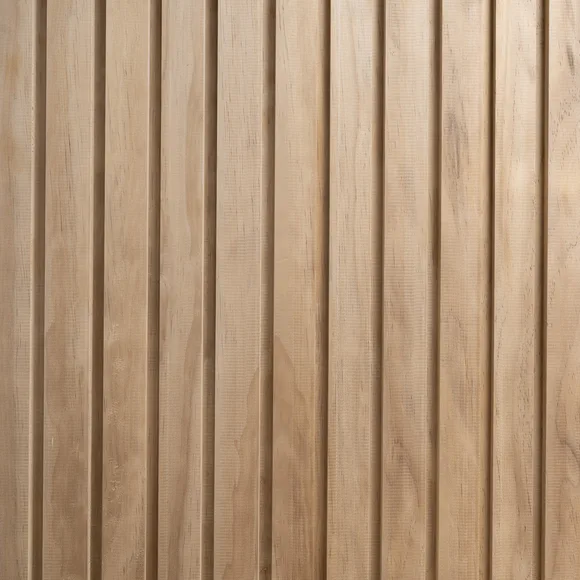
Image Credit:
Duffield Timber
Accoya® cladding is manufactured from sustainably sourced Radiata pine from New Zealand that has undergone acetylation to improve dimensional stability and biological durability. It can be used for cladding, because it has a durability class I (EN 350). The modification process alters the wood’s chemical structure, reducing moisture uptake without forming a surface coating. The product is supplied as profiled timber boards for external cladding applications. Performance includes high durability, resistance to decay and predictable long-term behaviour when installed correctly. Fire performance and structural properties are defined at material level, while overall façade performance depends on system design. Boards are mechanically fixed to supporting structures and can be finished or left untreated. Accoya® cladding is produced using international supply chains, with acetylation carried out in the Netherlands and downstream processing across Europe. Environmental impacts are documented in a cradle-to-grave EPD. Accoya® wood is certified as FSC® mix (minimal 70% FSC® and the rest controlled wood) and Cradle to Cradle® Gold among other certificates.
Region
Composition
Uses
Certificates
Downloads