Bas Princen

Performance Data

Embodied Carbon: Compared with a conventional reinforced concrete frame, the Stone Demonstrator drops embodied carbon by roughly 70%, and by around 90% when set against steel.

End of Life: Dry-stacked stone assembly designed for disassembly, allowing stones to be dismantled, reused and relocated without permanent fixings.

Construction Process: Locally sourced natural stone assembled using dry-stacking techniques without mortar, demonstrating reversible construction and reducing reliance on carbon-intensive binding materials.

Introduction

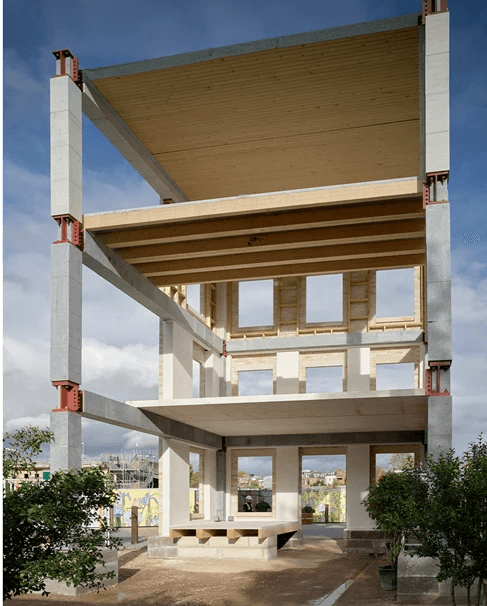
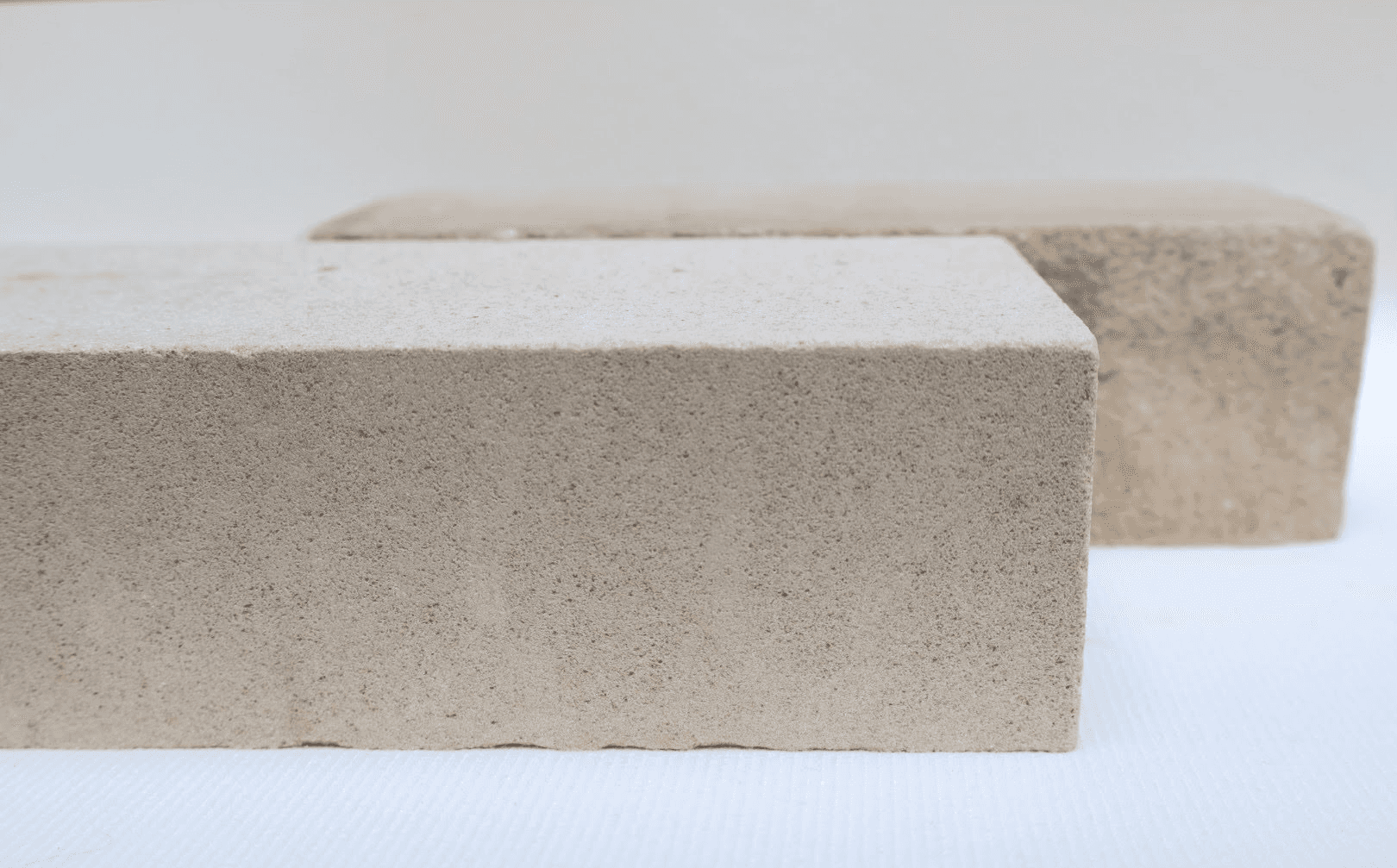
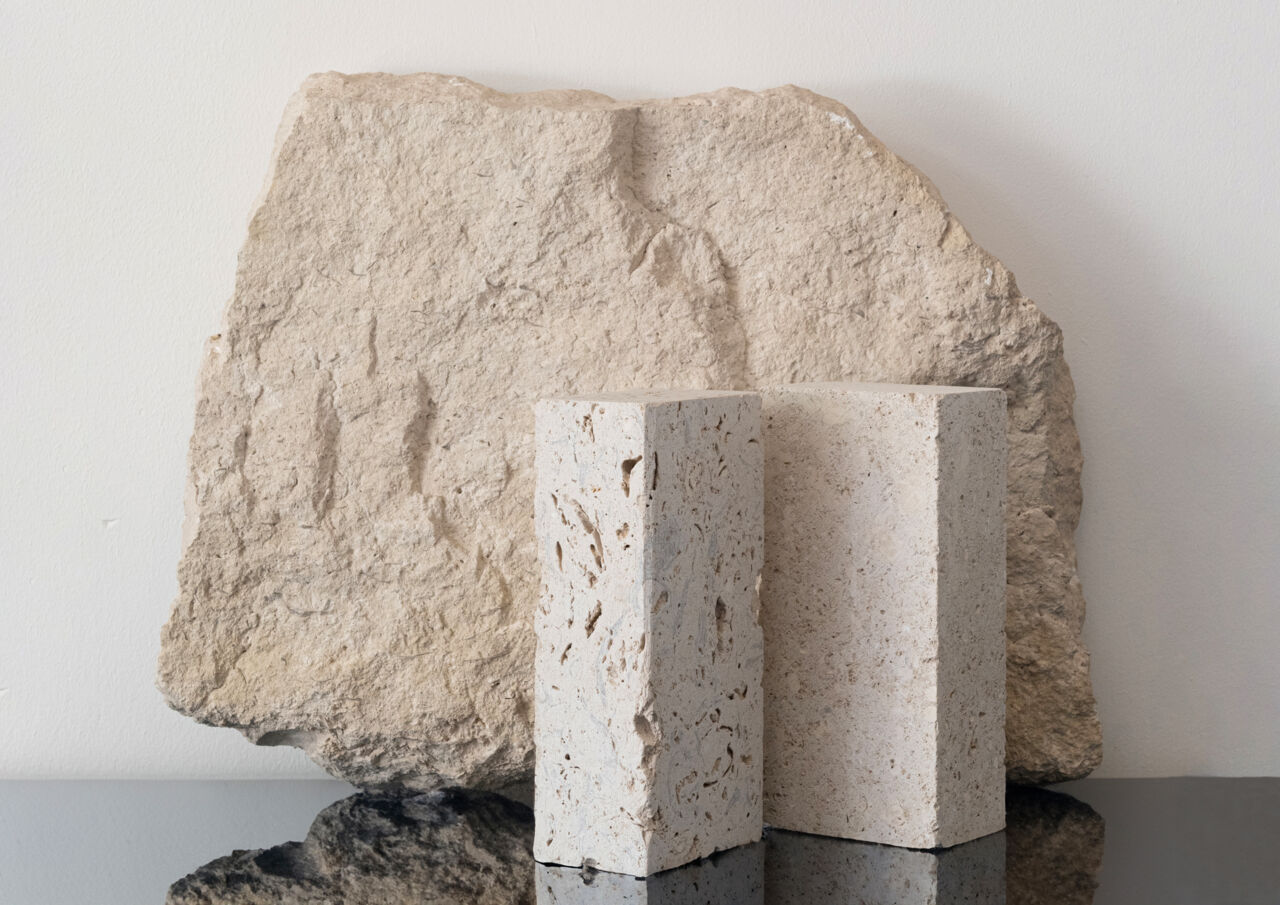
The Stone Demonstrator is a research pavilion developed through Future Observatory at the Design Museum to explore the potential of natural stone as a low-carbon structural material. Designed by architect Groupwork with structural engineers Webb Yates and Arup, the project investigates how pre-tensioned stone can provide a low-carbon alternative to conventional steel and concrete construction. The pavilion uses locally sourced stone blocks assembled through dry-stacking, removing the need for mortar or mechanical fixings and creating a structure designed for future disassembly and reuse. The project draws on traditional masonry techniques while applying contemporary structural analysis to demonstrate how stone can be reconsidered within circular construction systems. By using a durable, abundant and minimally processed material, the demonstrator investigates opportunities to reduce embodied carbon through material longevity, reversibility and simplified construction. The pavilion forms part of ongoing research into regenerative approaches to architecture, where material selection, structural logic and end-of-life considerations are integrated from the earliest stages of design.

The Stone Demonstrator is a research pavilion developed through Future Observatory at the Design Museum to explore the potential of natural stone as a low-carbon structural material. Designed by architect Groupwork with structural engineers Webb Yates and Arup, the project investigates how pre-tensioned stone can provide a low-carbon alternative to conventional steel and concrete construction. The pavilion uses locally sourced stone blocks assembled through dry-stacking, removing the need for mortar or mechanical fixings and creating a structure designed for future disassembly and reuse. The project draws on traditional masonry techniques while applying contemporary structural analysis to demonstrate how stone can be reconsidered within circular construction systems. By using a durable, abundant and minimally processed material, the demonstrator investigates opportunities to reduce embodied carbon through material longevity, reversibility and simplified construction. The pavilion forms part of ongoing research into regenerative approaches to architecture, where material selection, structural logic and end-of-life considerations are integrated from the earliest stages of design.

What to Notice

Stone as structure: Natural stone is explored as a primary load-bearing system rather than a decorative finish, challenging conventional material applications.

Dry assembly logic: Mortar-free construction enables dismantling, reuse and adaptation while reducing reliance on high-carbon binding materials.

Material longevity: Durable stone construction prioritises long service life and retention of material value across future cycles.

Traditional knowledge, contemporary application: Ancient dry-stone techniques are combined with modern engineering analysis to develop a scalable low-carbon construction approach.

Stone as structure: Natural stone is explored as a primary load-bearing system rather than a decorative finish, challenging conventional material applications.

Dry assembly logic: Mortar-free construction enables dismantling, reuse and adaptation while reducing reliance on high-carbon binding materials.

Material longevity: Durable stone construction prioritises long service life and retention of material value across future cycles.

Traditional knowledge, contemporary application: Ancient dry-stone techniques are combined with modern engineering analysis to develop a scalable low-carbon construction approach.

Project Team

Location

Year Completed

Project Value

Awards

Sources

Growing Practical Material Knowledge for Architects


Copyright © 2026 BuildBetterStuff.

All rights reserved.

Growing Practical Material Knowledge for Architects


Copyright © 2026 BuildBetterStuff.

All rights reserved.