Mixed-use
Reinventing Masonry with Excavated Earth
Apex, Tribeca
Bennetts Associates
Carbon Data: Basement earth blocks ~10 % of embodied carbon of equivalent concrete blocks; no declared unit or lifecycle modules published.
End of Life: Unfired earth blocks are 100% recyclable which can be broken down and reused or returned to nature at end of life.
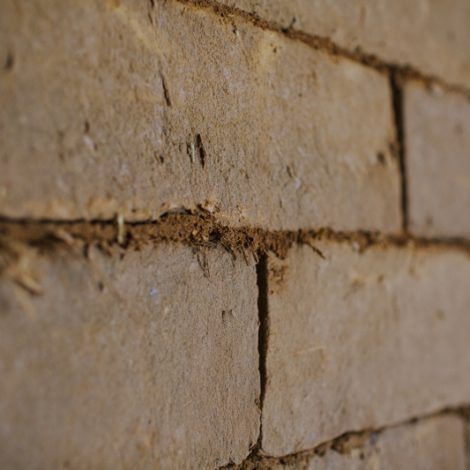
Construction Process: Excavated site subsoil mixed with sand and straw and formed into unfired compressed earth blocks, dried rather than fired, then laid to line basement walls, reducing waste to landfill.
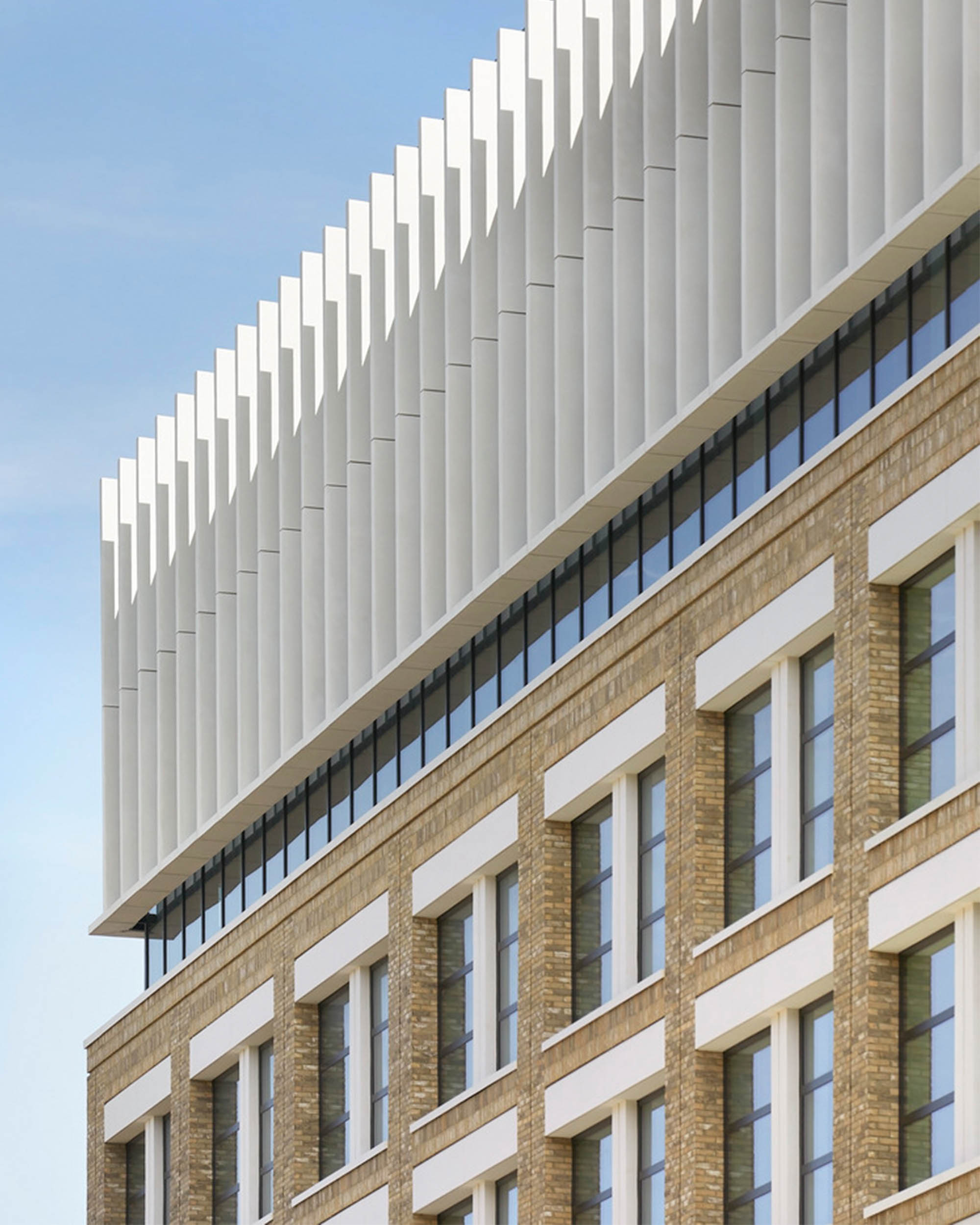
Apex, Tribeca is a six-storey commercial and laboratory hub at the centre of London’s Tribeca development, designed by Bennetts Associates for Reef Group to support biotech and emerging science uses. The project’s architecture adopts robust warehouse-like gestures with deep punched fenestration and a curving brick façade to align with the canal edge and surrounding context while providing flexible interior environments for research, offices, and community uses. A pioneering element of the building’s environmental strategy is the use of unfired earth blocks in the basement walls, manufactured off-site from the project’s excavated clay subsoil mixed with sand and straw, then dried rather than fired. This approach eliminates the high carbon emissions associated with firing clay or cement-based blockwork and integrates site material back into the building fabric, reducing waste and embodied carbon relative to conventional methods. Collaboration with HG Matthews enabled testing and specification of block mixes tailored to performance criteria, and the blocks function as a low-carbon liner over the concrete basement structure. The method exemplifies an innovative circular material approach for large-scale urban construction.
Apex, Tribeca is a six-storey commercial and laboratory hub at the centre of London’s Tribeca development, designed by Bennetts Associates for Reef Group to support biotech and emerging science uses. The project’s architecture adopts robust warehouse-like gestures with deep punched fenestration and a curving brick façade to align with the canal edge and surrounding context while providing flexible interior environments for research, offices, and community uses. A pioneering element of the building’s environmental strategy is the use of unfired earth blocks in the basement walls, manufactured off-site from the project’s excavated clay subsoil mixed with sand and straw, then dried rather than fired. This approach eliminates the high carbon emissions associated with firing clay or cement-based blockwork and integrates site material back into the building fabric, reducing waste and embodied carbon relative to conventional methods. Collaboration with HG Matthews enabled testing and specification of block mixes tailored to performance criteria, and the blocks function as a low-carbon liner over the concrete basement structure. The method exemplifies an innovative circular material approach for large-scale urban construction.
Site-soil material reuse: Excavated clay subsoil was processed into unfired compressed earth blocks used for basement lining and internal walls.
Low-energy masonry production: Earth blocks are mechanically compressed and air-dried rather than kiln-fired, reducing manufacturing emissions.
Circular construction logic: Using excavated soil avoids landfill disposal while integrating site material directly into the building fabric.
Hybrid structural strategy: Earth blocks function as non-structural lining elements within a conventional concrete basement structure.
Scope clarification: Unfired earth blocks are used in basement and internal walls only, not in the external façade system. Nonetheless, replacing cement-based basement and internal walls with unfired earth blocks reduces embodied carbon and construction waste.
Site-soil material reuse: Excavated clay subsoil was processed into unfired compressed earth blocks used for basement lining and internal walls.
Low-energy masonry production: Earth blocks are mechanically compressed and air-dried rather than kiln-fired, reducing manufacturing emissions.
Circular construction logic: Using excavated soil avoids landfill disposal while integrating site material directly into the building fabric.
Hybrid structural strategy: Earth blocks function as non-structural lining elements within a conventional concrete basement structure.
Scope clarification: Unfired earth blocks are used in basement and internal walls only, not in the external façade system. Nonetheless, replacing cement-based basement and internal walls with unfired earth blocks reduces embodied carbon and construction waste.
Project Team
Location
Year Completed
Project Value
Awards
Sources
More Stories
More articles you may find useful, carefully selected from our journal