Community & Education

Extending Heritage Community library with Reclaimed Timber Pavilion

Lea Bridge Library Pavilion
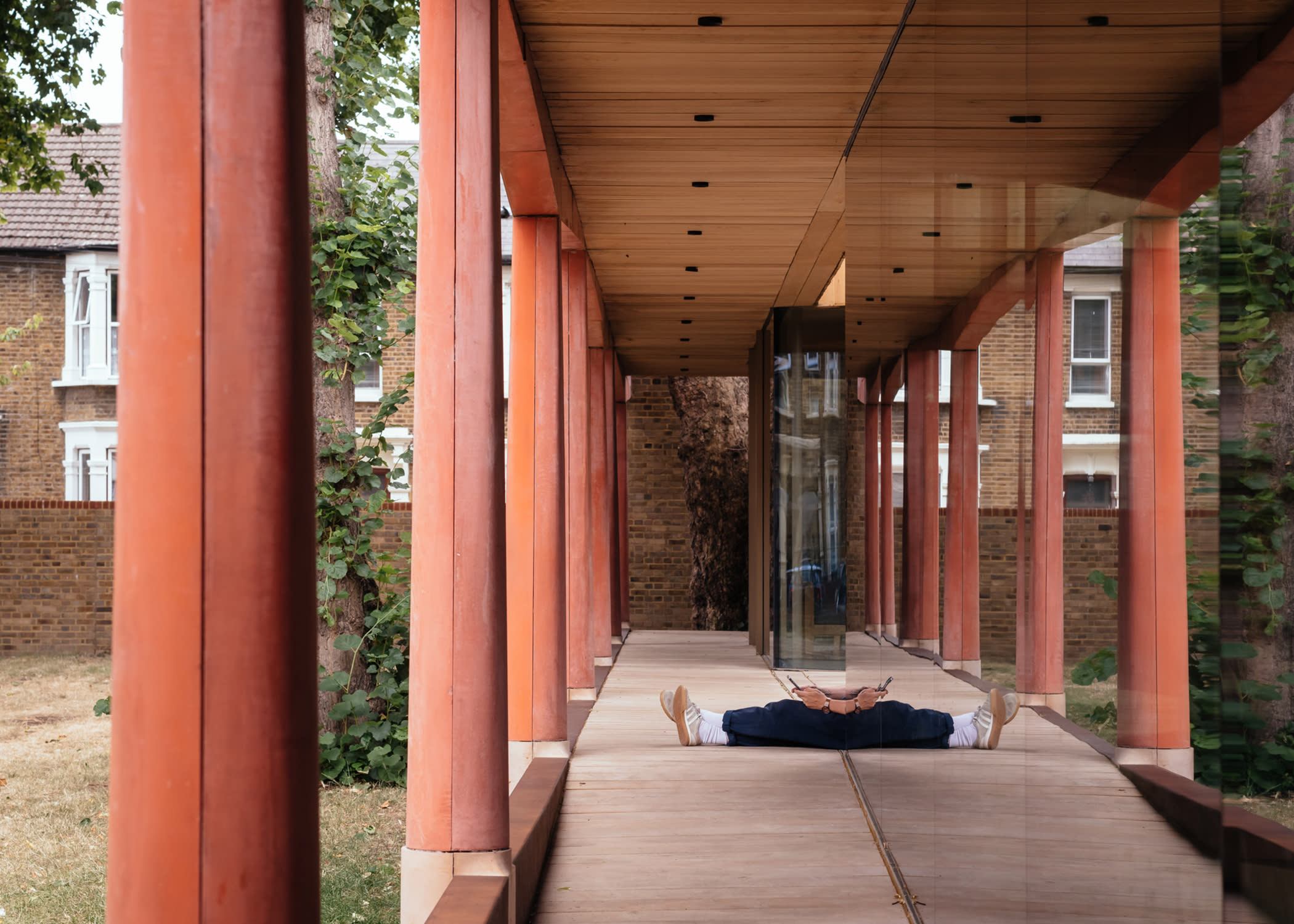
Jim Stephenson/ Studio Weave

Embodied Carbon: 147 kgCO₂e/m² (A1–A5, upfront carbon emissions)
Design Life: 60 years
Operational Energy: 46.8 kWh/m²/yr (B6 operational energy)
End of Life: Internal joinery and furniture timber reclaimed from felled trees; structural timber recoverable but no formal end-of-life strategy reported.
Construction Process: Mass timber LVL post-and-beam structure with floor-to-ceiling glazing; reclaimed timber joinery integrated to reduce material waste

Lea Bridge Library Pavilion, designed by Studio Weave , is a 250 m² single-storey extension to a Grade-II listed Edwardian library in east London, accommodating a flexible café and community facility that reconnects the existing building with adjacent gardens. The structural strategy employs a mass timber post-and-beam system of tapered laminated veneer lumber (LVL) beams supporting an extensive glazed elevation overlooking Friendship Gardens, anchored laterally against an existing garden wall to minimise intervention and maximise site connectivity. A red precast concrete colonnade echoes the material tone of the heritage building while concealing drainage that feeds tree root systems below, addressing sensitive arboricultural constraints. The internal space is defined by reclaimed timber linings and bespoke furniture crafted from trees felled around London, reinforcing a material logic of reuse to reduce upfront carbon, while the plan’s deliberate ‘pinch’ and curved glass element accommodate existing mature trees. Passive environmental strategies include natural cross-ventilation and MVHR support, positioned ceilings to protect exposed aggregate floors from solar gain, and careful daylighting. The project balances structural efficiency, adaptive community use and material sustainability within a heritage context.

Lea Bridge Library Pavilion, designed by Studio Weave , is a 250 m² single-storey extension to a Grade-II listed Edwardian library in east London, accommodating a flexible café and community facility that reconnects the existing building with adjacent gardens. The structural strategy employs a mass timber post-and-beam system of tapered laminated veneer lumber (LVL) beams supporting an extensive glazed elevation overlooking Friendship Gardens, anchored laterally against an existing garden wall to minimise intervention and maximise site connectivity. A red precast concrete colonnade echoes the material tone of the heritage building while concealing drainage that feeds tree root systems below, addressing sensitive arboricultural constraints. The internal space is defined by reclaimed timber linings and bespoke furniture crafted from trees felled around London, reinforcing a material logic of reuse to reduce upfront carbon, while the plan’s deliberate ‘pinch’ and curved glass element accommodate existing mature trees. Passive environmental strategies include natural cross-ventilation and MVHR support, positioned ceilings to protect exposed aggregate floors from solar gain, and careful daylighting. The project balances structural efficiency, adaptive community use and material sustainability within a heritage context.

Material strategy: Use of concrete slab, LVL timber frame, steel posts as primary structure. Reuse of locally sourced reclaimed timber for internal linings and furniture

Prefabrication / MMC strategy: LVL engineered timber components assembled on site; bespoke joinery integrated.

Environmental performance logic: Minimising upfront embodied carbon through engineered timber structure. Reuse of felled timber to lower embodied carbon. Passive ventilation and heat recovery strategies.

Architectural expression: elongated glazed pavilion with colonnade and timber interior responding to garden context.


Material strategy: Use of concrete slab, LVL timber frame, steel posts as primary structure. Reuse of locally sourced reclaimed timber for internal linings and furniture

Prefabrication / MMC strategy: LVL engineered timber components assembled on site; bespoke joinery integrated.

Environmental performance logic: Minimising upfront embodied carbon through engineered timber structure. Reuse of felled timber to lower embodied carbon. Passive ventilation and heat recovery strategies.

Architectural expression: elongated glazed pavilion with colonnade and timber interior responding to garden context.


Project Team

Location

Year Completed

Project Value

Awards

Sources

More Stories

More articles you may find useful, carefully selected from our journal
Tell us what you’re building

Work with a team that brings clarity, care, and creativity to every project.

Tell us what you’re building

Work with a team that brings clarity, care, and creativity to every project.

Tell us what you’re building

Work with a team that brings clarity, care, and creativity to every project.

Growing Practical Material Knowledge for Architects


Copyright © 2026 BuildBetterStuff.

All rights reserved.

Growing Practical Material Knowledge for Architects


Copyright © 2026 BuildBetterStuff.

All rights reserved.