Education

A Scalable Prototype for Educational Buildings Using Proven Natural Materials

Wales Institute for Sustainable Education (Wise)
Buro Happold

Embodied Carbon: Not declared

Design Life: Not declared

Thermal Performance: Not declared

Operational Energy: Not declared

Indoor Air Quality: Not declared

Renewable Energy Integration: Solar photovoltaic panels, solar thermal systems, and biomass heating integrated within the building energy strategy

End of Life: Rammed earth walls consist of natural materials that can be broken down and returned to the ground at end of life

Construction Process: Rammed earth walls constructed from locally sourced subsoil combined with timber structural elements and bio-based materials to minimise transport and embodied impacts
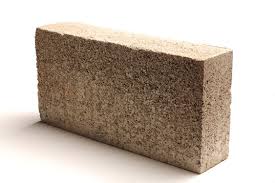

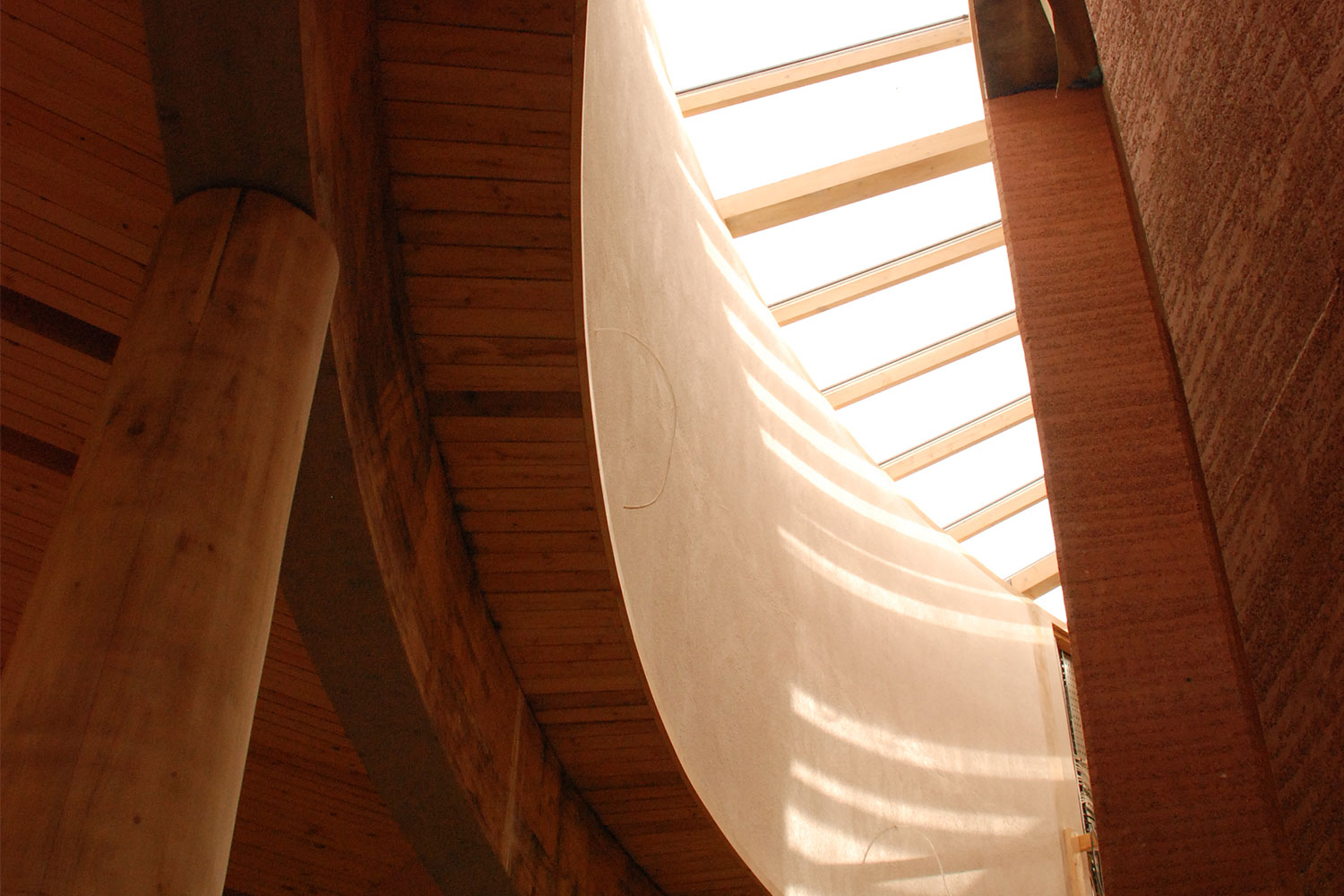
The Wales Institute for Sustainable Education (WISE) at the Centre for Alternative Technology demonstrates how natural materials can deliver robust performance at an institutional scale. Designed for teaching and conferences, the building consists of glulam timber frame, Hemcrete® external walls, and 7.2-metre-high rammed-earth walls for the lecture theatre. Each chosen for its specific structural, thermal, or environmental strengths. Prefabricated timber cassette floors improve buildability, enable long spans, and manage natural moisture-related movement. The envelope is fully breathable, combining hemp-lime, earth, lime renders, and timber windows to create low-toxicity interiors and stable thermal conditions.

The clear hierarchy of materials shows how regenerative strategies can align with mainstream construction practices while achieving low embodied carbon, energy efficiency, and occupant comfort. WISE offers a prototypical model for designers seeking practical ways to integrate natural materials with technical confidence.

The Wales Institute for Sustainable Education (WISE) at the Centre for Alternative Technology demonstrates how natural materials can deliver robust performance at an institutional scale. Designed for teaching and conferences, the building consists of glulam timber frame, Hemcrete® external walls, and 7.2-metre-high rammed-earth walls for the lecture theatre. Each chosen for its specific structural, thermal, or environmental strengths. Prefabricated timber cassette floors improve buildability, enable long spans, and manage natural moisture-related movement. The envelope is fully breathable, combining hemp-lime, earth, lime renders, and timber windows to create low-toxicity interiors and stable thermal conditions.

The clear hierarchy of materials shows how regenerative strategies can align with mainstream construction practices while achieving low embodied carbon, energy efficiency, and occupant comfort. WISE offers a prototypical model for designers seeking practical ways to integrate natural materials with technical confidence.

Carbon reduction and material strategy: The building is conceived as a low-embodied-energy building, prioritising materials with minimal processing, local sourcing, and end-of-life recoverability. This strategy deliberately shifts emphasis away from high-tech offsets toward material honesty and longevity.

Passive environmental design and fabric first approach: The building relies primarily on passive performance, reducing operational energy demand before adding renewables. Thermal mass from rammed earth helps moderate internal temperature fluctuations. The use of natural and high performance insulation minimum heath loss. Natural ventilation via stack effect and cross-ventilation eliminates the need for mechanical cooling. The result is a building that performs comfortably with minimal active systems.

Integrated renewables: Solar photovoltaics, solar thermal collectors and biomass heating provide on-site renewable energy for building operation.

Carbon reduction and material strategy: The building is conceived as a low-embodied-energy building, prioritising materials with minimal processing, local sourcing, and end-of-life recoverability. This strategy deliberately shifts emphasis away from high-tech offsets toward material honesty and longevity.

Passive environmental design and fabric first approach: The building relies primarily on passive performance, reducing operational energy demand before adding renewables. Thermal mass from rammed earth helps moderate internal temperature fluctuations. The use of natural and high performance insulation minimum heath loss. Natural ventilation via stack effect and cross-ventilation eliminates the need for mechanical cooling. The result is a building that performs comfortably with minimal active systems.

Integrated renewables: Solar photovoltaics, solar thermal collectors and biomass heating provide on-site renewable energy for building operation.

Project Team

Location

Year Completed

Project Value

Awards

Sources

More Stories

More articles you may find useful, carefully selected from our journal
Tell us what you’re building

Work with a team that brings clarity, care, and creativity to every project.

Tell us what you’re building

Work with a team that brings clarity, care, and creativity to every project.

Tell us what you’re building

Work with a team that brings clarity, care, and creativity to every project.

Growing Practical Material Knowledge for Architects


Copyright © 2026 BuildBetterStuff.

All rights reserved.

Growing Practical Material Knowledge for Architects


Copyright © 2026 BuildBetterStuff.

All rights reserved.