Community/ Education
A Community Food-growing Enterprise Hub in the Heart of North London
Wolves Lane Centre
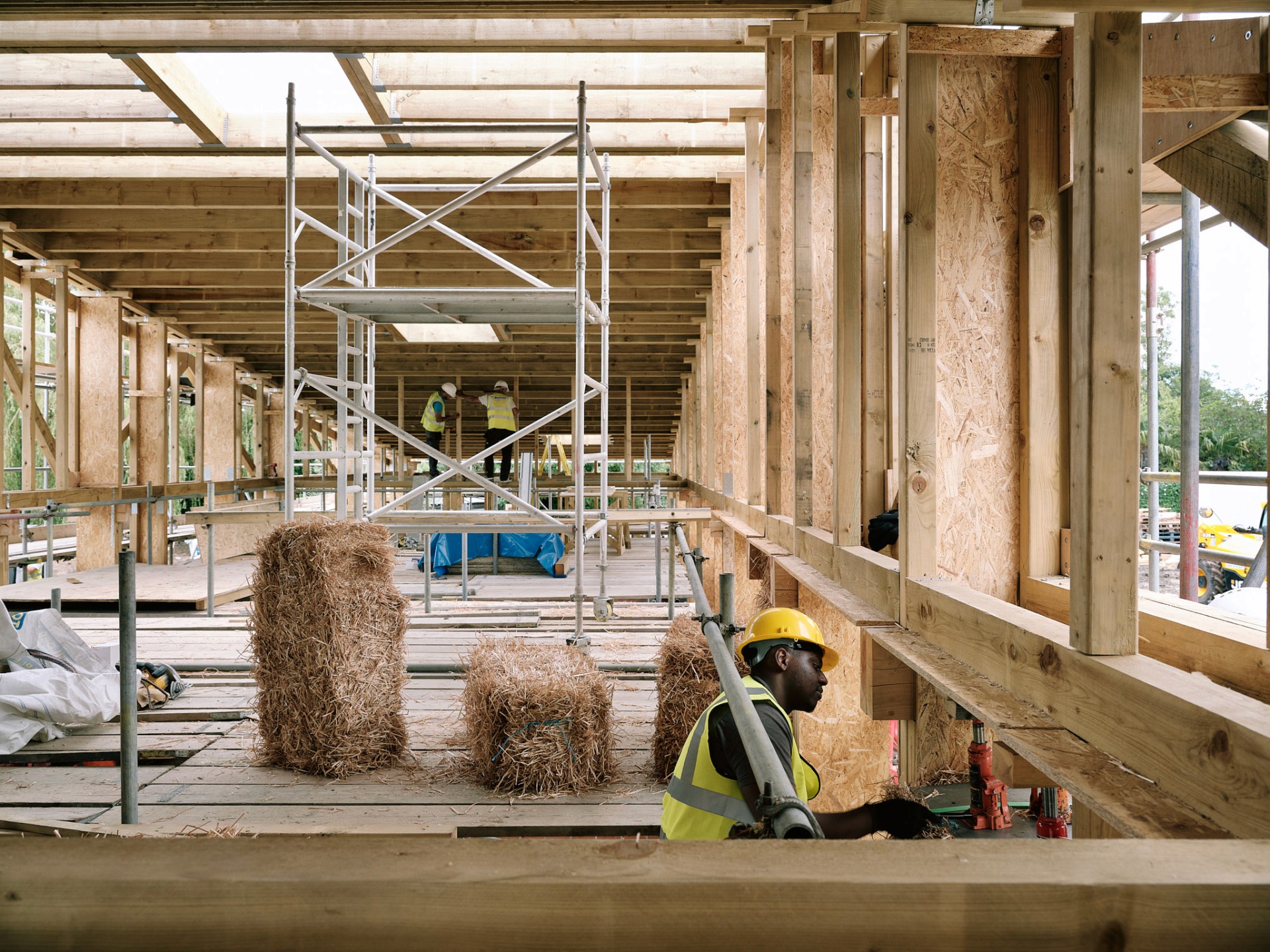
Image Credit: Henry Woide and Luke ODonovan
End of Life: Bio-based materials including straw, clay and timber can be returned to the ground or reused.
Construction Process: Lightweight timber frames using C16 timber infilled with straw bales sourced from farms in Letchworth and rendered with lime.
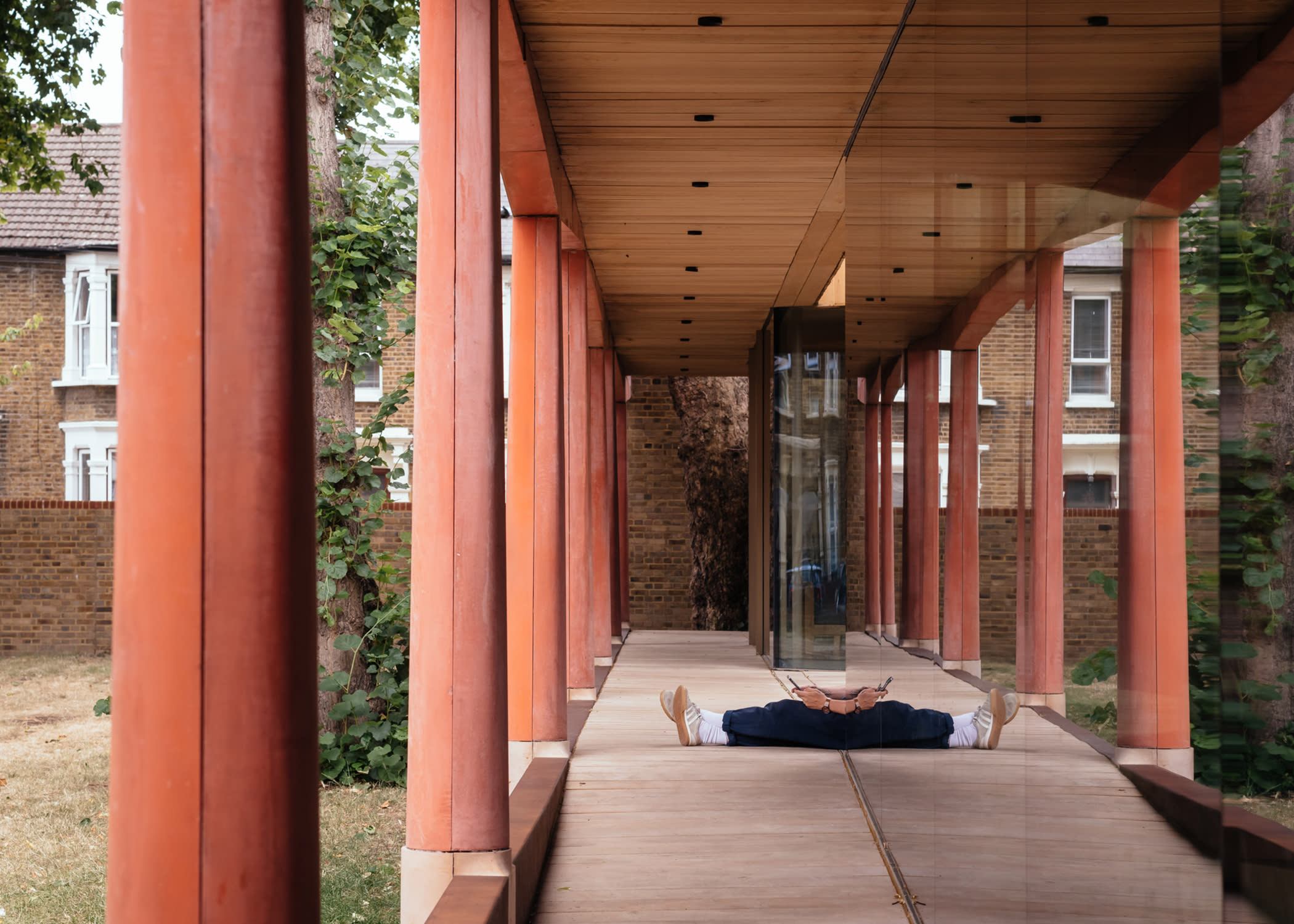
Wolves Lane Centre is a community food-growing and enterprise hub in North London developed through a series of new buildings designed by Material Cultures in collaboration with Studio Gil. The project revitalises a former municipal plant nursery and provides spaces for education, food production, community events, and small-scale enterprise. The architectural strategy adopts a bio-regional material system that prioritises locally sourced, low-processed materials. The primary construction system consists of lightweight timber frames fabricated from lower structural grade C16 timber, enabling supply from smaller regional sawmills. Wall assemblies incorporate straw bale infill sourced from farms in Letchworth approximately 35 miles from the site, finished externally with lime render. The use of straw bales produces deep window reveals and high levels of insulation while maintaining a breathable wall construction. Internal partitions are formed using Strocks® unfired clay blocks composed of clay and chopped straw. Clay from the site is reused for mortar and internal plasters, while crushed rubble from demolished hardstanding is repurposed within the foundations. The buildings are arranged around a sequence of courtyards, and each internal space is accessed directly from outside, eliminating internal circulation corridors and enabling adaptable use with natural light and ventilation.
The project demonstrates how regenerative material strategies can be embedded within community-led development, supporting local material supply chains while prioritising internal comfort and occupant wellbeing.
Wolves Lane Centre is a community food-growing and enterprise hub in North London developed through a series of new buildings designed by Material Cultures in collaboration with Studio Gil. The project revitalises a former municipal plant nursery and provides spaces for education, food production, community events, and small-scale enterprise. The architectural strategy adopts a bio-regional material system that prioritises locally sourced, low-processed materials. The primary construction system consists of lightweight timber frames fabricated from lower structural grade C16 timber, enabling supply from smaller regional sawmills. Wall assemblies incorporate straw bale infill sourced from farms in Letchworth approximately 35 miles from the site, finished externally with lime render. The use of straw bales produces deep window reveals and high levels of insulation while maintaining a breathable wall construction. Internal partitions are formed using Strocks® unfired clay blocks composed of clay and chopped straw. Clay from the site is reused for mortar and internal plasters, while crushed rubble from demolished hardstanding is repurposed within the foundations. The buildings are arranged around a sequence of courtyards, and each internal space is accessed directly from outside, eliminating internal circulation corridors and enabling adaptable use with natural light and ventilation.
The project demonstrates how regenerative material strategies can be embedded within community-led development, supporting local material supply chains while prioritising internal comfort and occupant wellbeing.
Bio-regional construction: Straw, timber and clay sourced within the surrounding region form the primary structural and envelope materials.
Straw bale envelope: Thick straw bale walls provide insulation while creating deep window reveals and breathable wall assemblies.
Low-grade timber utilisation: Structural frames use readily available C16 timber from small regional sawmills rather than engineered timber products.
Community-scale construction: The building system prioritises simple materials and techniques compatible with local labour and collaborative construction.
Bio-regional construction: Straw, timber and clay sourced within the surrounding region form the primary structural and envelope materials.
Straw bale envelope: Thick straw bale walls provide insulation while creating deep window reveals and breathable wall assemblies.
Low-grade timber utilisation: Structural frames use readily available C16 timber from small regional sawmills rather than engineered timber products.
Community-scale construction: The building system prioritises simple materials and techniques compatible with local labour and collaborative construction.
Project Team
Location
Year Completed
Project Value
Awards
Sources
More Stories
More articles you may find useful, carefully selected from our journal